
How to Turn Your Valentine's Day Pitch into a NYT-Worthy Story
Valentine’s Day is one of the noisiest times of the year for the media. Every florist, chocolatier, and jewelry brand is clamoring for attention. So how do you cut through the noise and land a placement in a publication as prestigious as The New York Times?
The secret isn’t just sharing a great product; it’s about shifting your mindset from selling to collaborating.
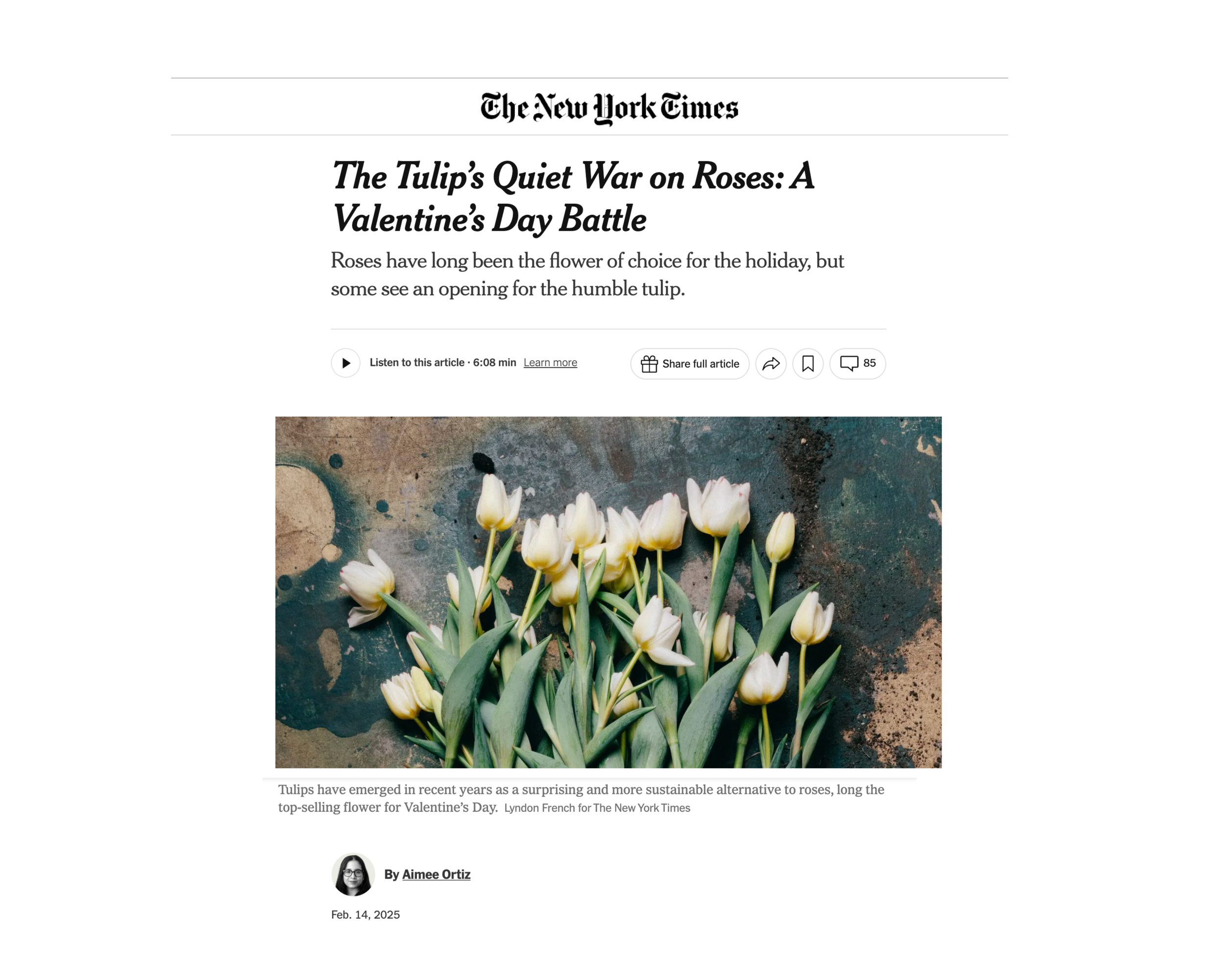
To illustrate how collaborating is different from selling in a publicist + journalist relationship, let’s analyze a successful pitch sent to Aimee, a reporter at The New York Times, regarding the rising popularity of tulips. We’ll break down exactly what makes a pitch "print-worthy”... hint… it’s not the pitch alone.
Make it stand out
Whatever it is, the way you tell your story online can make all the difference.
1. Don’t Just Pitch a Product; Pitch a Trend
Journalists are rarely looking for a commercial for your product; they are looking for a story. In the successful NYT pitch, the angle wasn't "Buy Andrew's Farm Tulips." It was a broader economic and cultural narrative: "Tulips are becoming more popular and roses less."
Our media pitch example provided a compelling why: Roses are not perennials, are expensive due to overseas shipping, and are subject to tariffs. In contrast, "Tulips thrive here in the U.S. and avoid tariffs."
The Lesson: As noted in standard pitch templates, you must explain how the product will shift mindsets or change habits. Don't tell them what you sell; tell them how the market is changing.
2. Bring the Receipts. Data is King!
A story without data is just an opinion. The NYT pitch didn't just claim tulips were popular; it provided a treasure trove of evidence. The email included:
Links to Statista showing the quantity of tulips sold vs. roses.
Articles from Better Homes & Gardens and The Independent confirming the trend.
Specific cultural context, such as the meaning of flower colors (e.g., Red tulips represent true love).
The Lesson: Pitch templates emphasize that journalists want facts and rely on them to write stories. You should always include data points, sales numbers, or active user stats to validate that your topic is worth talking about.
3. Serve the Sources on a Silver Platter
Journalists are on tight deadlines. The easier you make their job, the more likely they are to feature you. In the NYT example, the pitcher didn't just offer their own client. They provided contact information for third-party industry heavyweights:
Allan Visser: A major bulb grower and broker in Holland
Ibo Gülsen: The chairman of the World Tulip Society
The Lesson: When proposing an interview, you must clearly specify WHO is available and WHY is this person an expert, highlighting their accolades and roles. By providing a mix of sources and subject-matter experts, you position yourself as a resource, not just a salesperson.
4. Master the Timing
The NYT pitch ends with a warm sign-off: "I hope that helps!! Thanks Aimee!". But even the friendliest email will fail if sent at the wrong time.
The Lesson: For holiday-specific pitches like Valentine's Day, timing is critical. Standard advice suggests that any time before September is too soon, and a week before the holiday is WAY too late. You need to hit that sweet spot where editors are actively planning their holiday coverage to give your pitch news value.
Summary
The difference between a deleted email and a feature story often comes down to utility. The note to Aimee wasn't a demand for coverage; it was a "collaboration." By combining a strong trend (roses out, tulips in), hard data, and accessible experts, the pitch gave the journalist everything she needed to write the story.
This Valentine’s Day, don’t just send a press release. Send a story package. And you just might help form this year’s Valentine’s Story in the New York Times.
